About

Muamalat Institute

A Public-Interest Political Economy Institute

Rooted in the Muamalat tradition of real economics, equitable access, and just public law.

Institutional Overview

Rebuilding A Moral Economic Architecture

The Muamalat Institute is a public-interest political economy institute dedicated to the revival and contemporary application of Muamalat — the transactional, civic, and economic dimension of Islam.
Our work bridges classical legal tradition and modern institutional design. We operate as both a think tank and advisory body, developing frameworks for:

Productive participation and entrepreneurship

Public market infrastructure

Commons-based institutional models (Awqaf)

Real-asset monetary systems

Sovereign economic strategy

Relaunched in 2026 as a consolidated institutional platform, the Institute builds on more than three decades of applied work in gold currency, anti-usury legal reform, public market design, and Islamic public law.

Historical Lineage

“The Muamalat Institute draws from a living tradition of moral political economy”

Intellectual Foundations

The Muamalat Institute draws from a living tradition of moral political economy that can be found across cultures and history — from Andalusia and Ottoman cities to Tang Dynasty trade corridors and Mediterranean market republics — where societies flourished when:

Money represented real value

Commons were protected

Trade was lawful and open

Guilds structured labor

Public trust governed contracts

Our work draws directly from the most complete, scaled, and successful expression of economic equity and prosperity in modern human history: the political economy of historical Madinah (Al-Madina al-Munawarah) — a system of public law governing markets, money, contracts, and commons.

From Madinah, this model was expressed across Andalusia, North Africa, the Mediterranean basin, West Africa, Central Asia, and the Silk Road trade networks — forming one of the largest and most cohesive economic blocs in pre-modern history.

This tradition is not ideological. It is civilizational. It reflects perennial principles of economic order and natural law that were refined, perfected, and scaled through Muslim governance and commercial practice.

We work from experiential knowledge gained through implementation — including gold currency initiatives, digital asset systems, public market design, and legal reform efforts.

Our approach is neither capitalist nor socialist. It is not communism and not financial liberalism. It is a real-asset political economy grounded in productive participation, commons-based infrastructure, and lawful exchange.

We believe enduring prosperity arises when money reflects value, markets are public institutions, and law protects the commons.

Lineage

The Muamalat Institute stands within a living scholarly tradition rooted in the ‘Amal (practice) of the People of Madinah — the school recorded by Imam Malik in Al-Muwatta.

Our intellectual foundation descends through a continuous scholarly transmission (silsilah) of the Maliki tradition — a lineage that preserved the civic and commercial dimensions of law through North Africa and Andalusia, including scholars such as Shaykh al-Darqawi and the Maghribi juristic tradition that safeguarded Muamalat as lived public law.

In the modern period, this transmission continued through:

Shaykh Dr. Abdalqadir as-Sufi (Ian Stewart Dallas)
A leading 20th-century thinker on Muamalat and the eradication of Riba (usury), whose teaching restored attention to the socio-economic dimensions of Islam as public law rather than private morality.

Founders

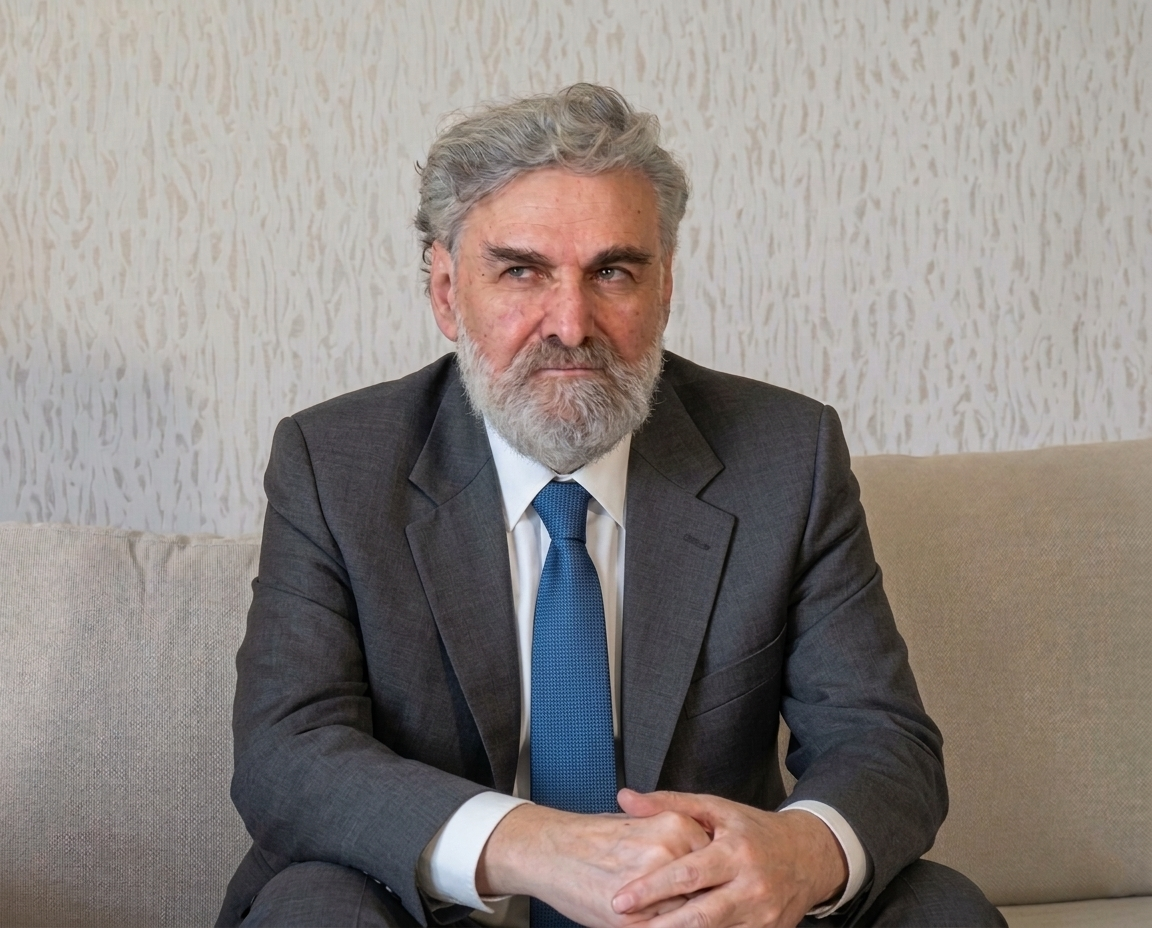
Shaykh Umar Vadillo seating
Shaykh Umar Ibrahim Vadillo

Founder & President

Umar Ibrahim Vadillo was born in 1964 in Al-Andalus (Spain). After studying agronomy at the University of Madrid, he embraced Islam and undertook decades of study in the legal and economic tradition rooted in historical Madinah, focusing on the application of classical commercial law to contemporary economic systems.

A prolific author and public intellectual, Shaykh Umar has written extensively on monetary reform, public markets, lawful trade, endowment-based institutions, and the structural critique of paper money and debt systems. His work examines how real-asset currency, endowments, and trade-based finance can replace systems dependent on interest-bearing debt and financial abstraction.

He is widely recognized as a pioneer in the contemporary reintroduction of gold and silver currency as circulating medium. Shaykh Umar was the principal force behind the Kelantan Gold Dinar initiative in Malaysia, where millions of gold and silver coins were minted and introduced into circulation under state authorization — one of the most significant modern attempts to restore asset-backed currency in public life. He also founded E-Dinar Ltd., one of the earliest digital gold currency systems, facilitating large-scale gold-denominated transactions and representing one of the first organized experiments in mass trade using gold currency in modern history.

Over three decades, Shaykh Umar has engaged policymakers, scholars, and public leaders across Turkey, Morocco, Malaysia, Pakistan, Indonesia, Zimbabwe, and South Africa on monetary reform and economic transition. His research on Dinar-based finance was used as a working reference by former Prime Minister Dr. Mahathir Mohamad of Malaysia. His proposals for asset-backed monetary reform were considered at senior levels in Turkey and Morocco, and his advocacy contributed to constitutional and parliamentary discussions addressing usury and exploitative finance in Pakistan.

For more than thirty years, Shaykh Umar has argued that monetary reform, public market infrastructure, and endowment-based institutions are prerequisites for reducing systemic dependence on usury and restoring lawful economic order.

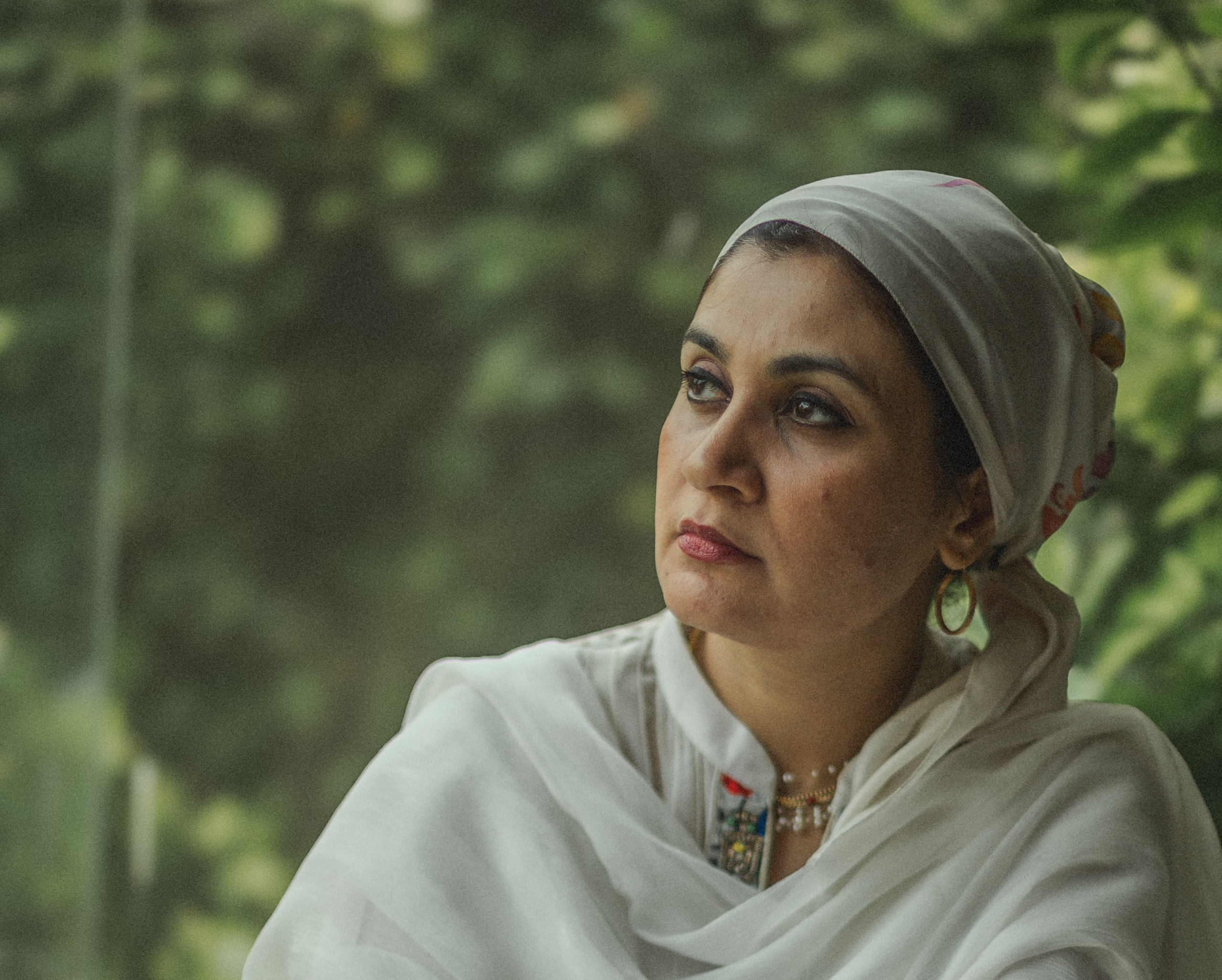
Doctor Humaira Shahid
Dr. Humaira Shahid

Executive Director

Dr. Humaira Shahid is a scholar, policy strategist, and public leader with experience spanning legislative reform, governance design, and institutional development.

A former parliamentarian in Punjab, she has contributed to national-level legal and policy frameworks addressing economic governance, social protection, and public accountability. Her policy work has contributed to measurable reductions in human trafficking and strengthened regulatory oversight in vulnerable sectors.

Dr. Shahid is a prolific author and journalist, widely recognized for her analysis of law, public ethics, and economic reform. She has held fellowship appointments, including at Harvard, and has engaged international audiences on questions of governance, human rights, and institutional resilience.

At the Muamalat Institute, Dr. Shahid directs strategic programming, policy publications, and international advisory engagements. She leads the Institute’s transition from intellectual framework to institutional application — translating moral political economy into actionable public policy.

What Makes Us Distinct

Civilizational Continuity
We operate within a living legal tradition, not a modern compliance industry.

Real-Asset Political Economy
We prioritize asset-backed monetary and production systems over debt-based financialization.

Commons-Based Infrastructure
We treat Awqaf and public markets as institutional architecture, not charitable afterthoughts.

Transition Strategy
We focus on staged institutional reform rather than rhetorical critique.

Institutional Structure

Muamalat Institute operates as:

A public-interest political economy institute

An advisory platform for NGOs, municipalities, and public-sector institutions

A policy research and publication body

The Institute is fiscally sponsored for certain engagements and is formalizing its nonprofit registration in Türkiye. A future implementation studio (for-profit arm) is planned for structured project delivery.

“Give full measure and weight in justice, and do not deprive people of their due.”

Our Vision

A world where nations reclaim sovereignty

through just trade, real money, and trust-based

systems where African, Asian, and Arab

communities rise together through Muamalat.

Our Mission

To revive and implement the original Islamic

economic model Muamalat rooted in justice,

trust, and real value. We strive to replace

exploitative financial systems with fair and

sustainable structures based on gold and

community centered trade.

Blockchain Technology

Utilized as a foundational tool for secure, transparent, and efficient digital registries and smart contracts. It is seen as ideal for trade and for commodity-based cryptocurrencies.

Digital Gold and Silver Currencies

Implementing 1:1 physically backed digital tokens, ensuring true representation of value and redeemability.

Wadiah Payment System

Designing secure digital payment systems based on the Islamic concept of Wadiah (safe-keeping), both on-site and account-based, suitable for modern public markets.

Digital Warehouse Management

Advanced systems for efficient inventory and logistics within Public Market ecosystems.

Artificial Intelligence

Employed for data-driven decision-making, economic simulations, risk assessment, and dynamic adjustments in credit allocation for strategic industrialization.

State-Administered Platforms

Emphasis on national digital platforms to ensure digital sovereignty and control over data and technology.