About

Muamalat Institute

A Public-Interest Political Economy Institute

Rooted in the Muamalat tradition of real economics, equitable access, and just public law.

Institutional Overview

Rebuilding A Moral Economic Architecture

The Muamalat Institute is a public-interest political economy institute dedicated to the revival and contemporary application of Muamalat — the transactional, civic, and economic dimension of Islam.
Our work bridges classical legal tradition and modern institutional design. We operate as both a think tank and advisory body, developing frameworks for:

Productive participation and entrepreneurship

Public market infrastructure

Commons-based institutional models (Awqaf)

Real-asset monetary systems

Sovereign economic strategy

Relaunched in 2026 as a consolidated institutional platform, the Institute builds on more than three decades of applied work in gold currency, anti-usury legal reform, public market design, and Islamic public law.

Historical Lineage

“The Muamalat Institute draws from a living tradition of moral political economy”

Intellectual Foundations

The Muamalat Institute draws from a living tradition of moral political economy that can be found across cultures and history — from Andalusia and Ottoman cities to Tang Dynasty trade corridors and Mediterranean market republics — where societies flourished when:

Money represented real value

Commons were protected

Trade was lawful and open

Guilds structured labor

Public trust governed contracts

Our work draws directly from the most complete, scaled, and successful expression of economic equity and prosperity in modern human history: the political economy of historical Madinah (Al-Madina al-Munawarah) — a system of public law governing markets, money, contracts, and commons.

From Madinah, this model was expressed across Andalusia, North Africa, the Mediterranean basin, West Africa, Central Asia, and the Silk Road trade networks — forming one of the largest and most cohesive economic blocs in pre-modern history.

This tradition is not ideological. It is civilizational. It reflects perennial principles of economic order and natural law that were refined, perfected, and scaled through Muslim governance and commercial practice.

We work from experiential knowledge gained through implementation — including gold currency initiatives, digital asset systems, public market design, and legal reform efforts.

Our approach is neither capitalist nor socialist. It is not communism and not financial liberalism. It is a real-asset political economy grounded in productive participation, commons-based infrastructure, and lawful exchange.

We believe enduring prosperity arises when money reflects value, markets are public institutions, and law protects the commons.

Lineage

The Muamalat Institute stands within a living scholarly tradition rooted in the ‘Amal (practice) of the People of Madinah — the school recorded by Imam Malik in Al-Muwatta.

Our intellectual foundation descends through a continuous scholarly transmission (silsilah) of the Maliki tradition — a lineage that preserved the civic and commercial dimensions of law through North Africa and Andalusia, including scholars such as Shaykh al-Darqawi and the Maghribi juristic tradition that safeguarded Muamalat as lived public law.

In the modern period, this transmission continued through:

Shaykh Dr. Abdalqadir as-Sufi (Ian Stewart Dallas)
A leading 20th-century thinker on Muamalat and the eradication of Riba (usury), whose teaching restored attention to the socio-economic dimensions of Islam as public law rather than private morality.

Founders

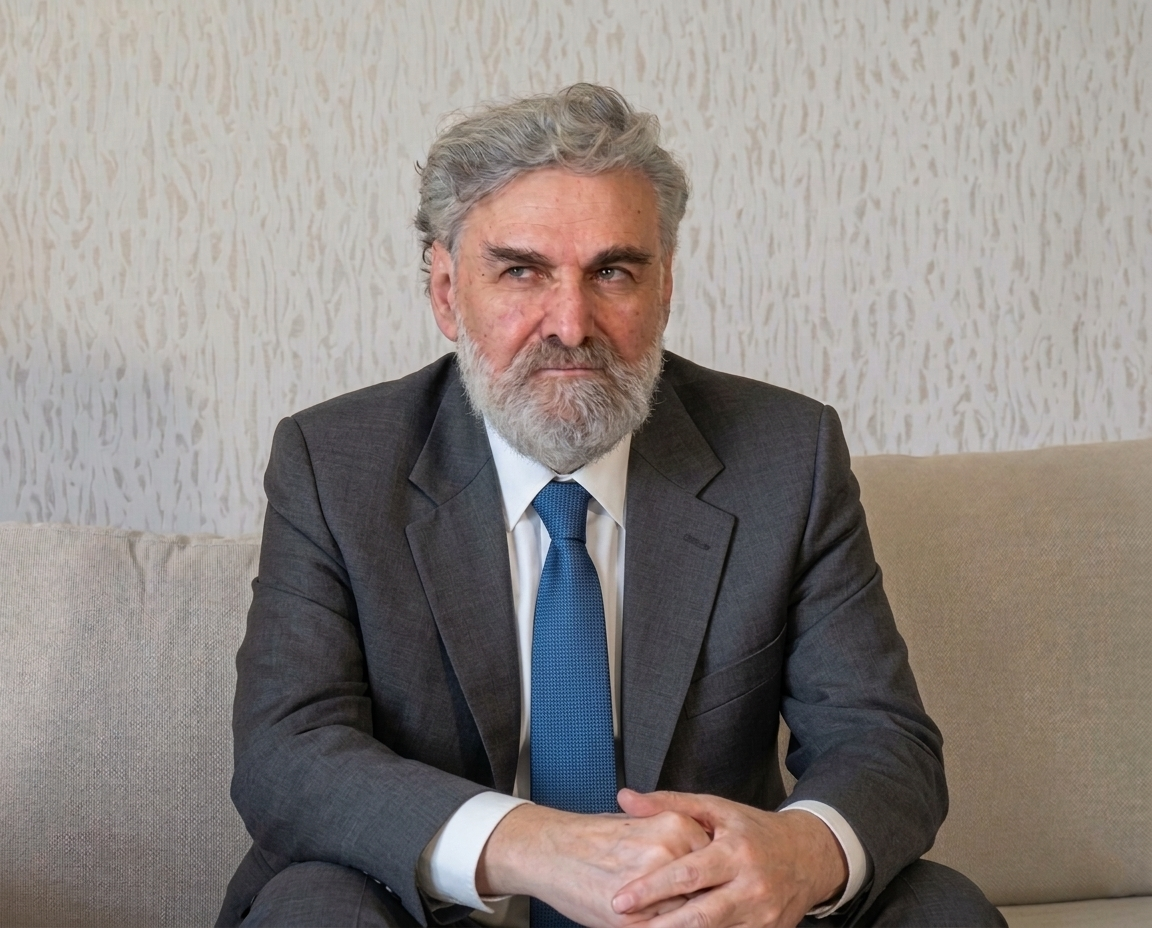
Shaykh Umar Vadillo seating
Shaykh Umar Ibrahim Vadillo

Founder & President

Umar Ibrahim Vadillo was born in 1964 in Al-Andalus (Spain). After studying agronomy at the University of Madrid, he embraced Islam and undertook decades of study in the legal and economic tradition rooted in historical Madinah, focusing on the application of classical commercial law to contemporary economic systems.

A prolific author and public intellectual, Shaykh Umar has written extensively on monetary reform, public markets, lawful trade, endowment-based institutions, and the structural critique of paper money and debt systems. His work examines how real-asset currency, endowments, and trade-based finance can replace systems dependent on interest-bearing debt and financial abstraction.

He is widely recognized as a pioneer in the contemporary reintroduction of gold and silver currency as circulating medium. Shaykh Umar was the principal force behind the Kelantan Gold Dinar initiative in Malaysia, where millions of gold and silver coins were minted and introduced into circulation under state authorization — one of the most significant modern attempts to restore asset-backed currency in public life. He also founded E-Dinar Ltd., one of the earliest digital gold currency systems, facilitating large-scale gold-denominated transactions and representing one of the first organized experiments in mass trade using gold currency in modern history.

Over three decades, Shaykh Umar has engaged policymakers, scholars, and public leaders across Turkey, Morocco, Malaysia, Pakistan, Indonesia, Zimbabwe, and South Africa on monetary reform and economic transition. His research on Dinar-based finance was used as a working reference by former Prime Minister Dr. Mahathir Mohamad of Malaysia. His proposals for asset-backed monetary reform were considered at senior levels in Turkey and Morocco, and his advocacy contributed to constitutional and parliamentary discussions addressing usury and exploitative finance in Pakistan.

For more than thirty years, Shaykh Umar has argued that monetary reform, public market infrastructure, and endowment-based institutions are prerequisites for reducing systemic dependence on usury and restoring lawful economic order.

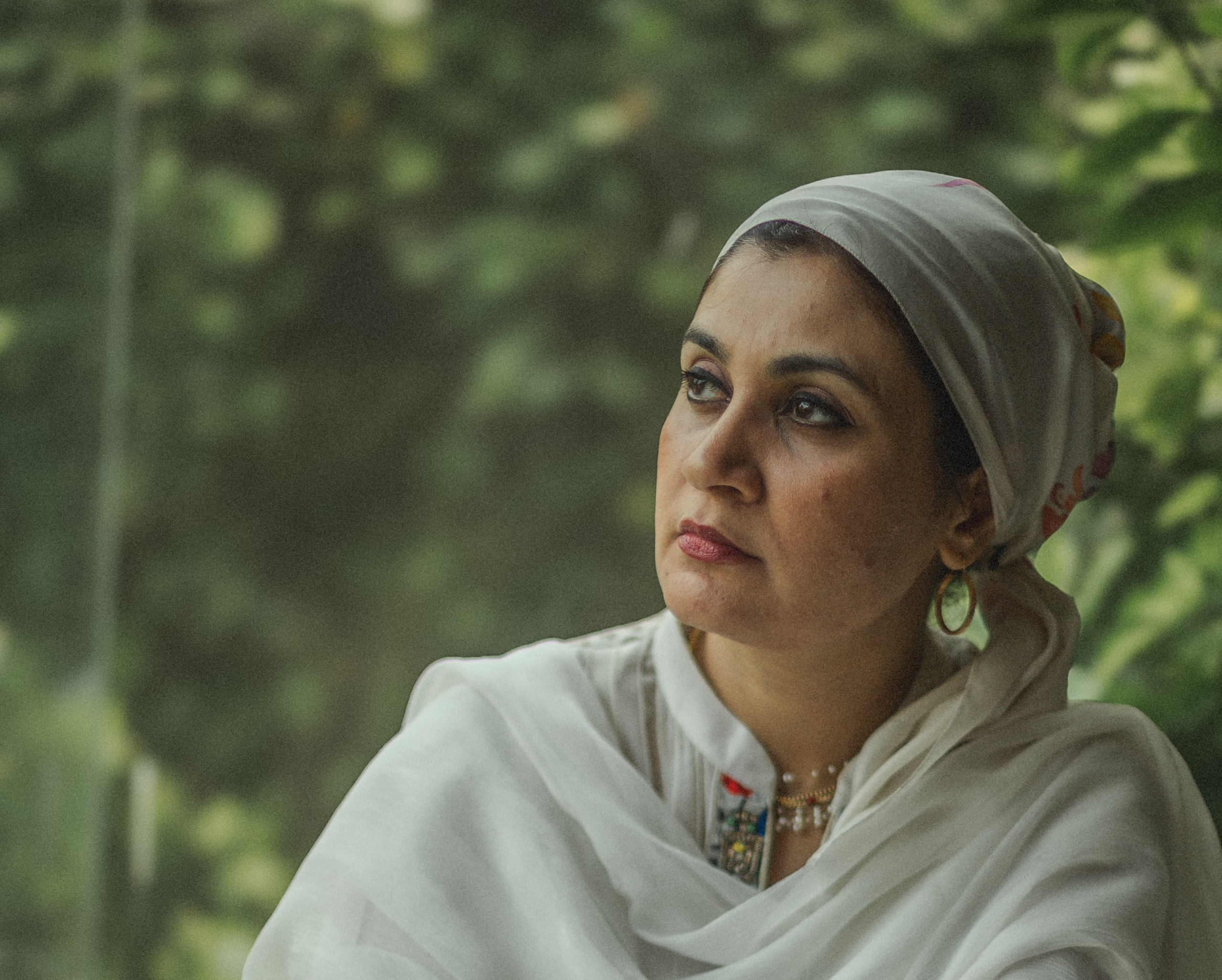
Doctor Humaira Shahid
Dr. Humaira Shahid

Executive Director

Dr. Humaira Shahid is a scholar, policy strategist, and public leader with experience spanning legislative reform, governance design, and institutional development.

A former parliamentarian in Punjab, she has contributed to national-level legal and policy frameworks addressing economic governance, social protection, and public accountability. Her policy work has contributed to measurable reductions in human trafficking and strengthened regulatory oversight in vulnerable sectors.

Dr. Shahid is a prolific author and journalist, widely recognized for her analysis of law, public ethics, and economic reform. She has held fellowship appointments, including at Harvard, and has engaged international audiences on questions of governance, human rights, and institutional resilience.

At the Muamalat Institute, Dr. Shahid directs strategic programming, policy publications, and international advisory engagements. She leads the Institute’s transition from intellectual framework to institutional application — translating moral political economy into actionable public policy.

Core team

Sakip Abdülhamid Farukoğlu

General Secretary

Sakıp Abdülhamid serves as the General Secretary of the Muamalat Institute, overseeing organisational coordination, programme execution and cross-regional operations.
His work centres on building the administrative structures required to translate policy initiatives into executable programmes: coordinating teams, managing projects, maintaining institutional processes and supporting engagements across multiple jurisdictions.
His broad linguistic capabilities also make him an important link between the Institute’s European, Turkish, South Asian and Arab networks.
Areas: Organisational Management · Project Management · Programme Coordination · International Operations
Languages: English · Urdu · Turkish · Arabic · Danish ·

Mazin Jamal

Head of Partnerships

Mazin Jamal leads strategic partnerships and institutional development at the Muamalat Institute, with a particular focus on the Middle East and Africa. His experience spans fund management, business compliance, nonprofit and NGO development, entrepreneurship, and community-led economic development.
He is the founder of Holistic Underground and the Ancient Futures Fund, through which he has worked at the intersection of capital, enterprise, social development, and institution-building. At the Institute, he focuses on translating strategic relationships into long-term partnerships with governments, investors, civil-society institutions, and development actors.
Areas: Strategic Partnerships · Fund Management · Business Compliance · Entrepreneurship · Community Development · MENA & Africa
Languages: English · Arabic

Yasser Derias

Head of Research & Policy

Yasser Derias leads the Institute’s research programme across sovereign economic policy, monetary reform, trade, and the institutional architecture of the Islamic Muamalat.

With a background in Energy Production Engineering, his work combines technical and economic analysis with research into Shari‘ah, Fiqh and the commercial practice of Madinah. His regional work focuses particularly on Africa and the MENA region, including the adaptation of policy frameworks to national economic, legal, resource and institutional conditions.

He also works across Arabic, English and French sources, supporting policy research, government proposals and cross-jurisdictional translation.

Areas: Economic Policy · Energy · MENA & Africa · Policy Research · Shari‘ah & Fiqh · Monetary & Trade Policy
Languages: English · Arabic · French

Susana Goikoetxea

Head of Strategy

Susana Goikoetxea leads strategic development at the Muamalat Institute, with particular responsibility for translating complex economic and institutional concepts into coherent programmes, systems and implementation frameworks.
Her technical background spans software engineering, data visualisation and 4D visualisation, giving her a distinctive ability to connect strategic planning with the digital tools required to model, communicate and implement complex systems.
Her work supports the Institute’s development of sovereign economic programmes, digital platforms, data-driven policy tools and visual models capable of communicating economic transformation at both governmental and public levels.
Areas of Expertise: Strategy · Systems Development · Software engineering · Data Visualisation · 4D Visualisation · Digital Strategy

Languages: English · Spanish · French

May Oude-Vrielink

Business Development & Communications

May Oude-Vrielink works across business development, institutional outreach and strategic communications for the Muamalat Institute.
Her role is focused on translating complex economic and policy ideas into clear public and institutional narratives, developing the Institute’s media presence, coordinating outreach campaigns and supporting relationships with prospective partners and stakeholders.
She works particularly at the intersection of research, communications and institutional development, helping ensure that policy proposals are presented effectively to different audiences—from public-facing educational programmes to senior governmental and international stakeholders.
Areas: Business Development · Strategic Communications · Institutional Outreach · Media Development · Marketing
Languages: English · French · German

Desiree Dorsainvil

Creative & Strategic Communications Advisor

Desiree Dorsainvil advises the Muamalat Institute on creative direction, visual communication and the presentation of its research and policy work.
Her role focuses on transforming complex economic, institutional and civilisational concepts into clear and compelling visual narratives across publications, presentations, campaigns and digital platforms.
She supports the Institute in maintaining a coherent international visual identity while adapting its communications to governmental, professional and public audiences.
Areas: Creative Strategy · Visual Communication · Editorial Presentation · Institutional Branding

Aminah Folli

Advisor — Artificial Intelligence Implementation

Aminah Folli leads advisory work on the practical implementation of artificial intelligence across the Muamalat Institute’s research and operational programmes.
Her work focuses on translating rapidly developing AI capabilities into usable institutional systems: research workflows, knowledge management, data analysis, communications, administrative automation and decision-support tools.
Within the Institute’s wider digital-sovereignty programme, she contributes to the development of approaches in which AI strengthens institutional capacity while remaining accountable to human governance and national priorities.
Areas: Artificial Intelligence · AI Implementation · Automation · Knowledge Systems · Institutional Digitalisation · Decision Support

Aamar Khwaja

Senior Advisor — Finance, Agriculture & Regenerative Development

Aamar Khwaja brings together experience in international finance, entrepreneurship and regenerative land development.
A former Wall Street banking professional with experience at JPMorgan, Merrill Lynch and Goldman Sachs, he subsequently moved into entrepreneurship and advisory work. His expertise encompasses financial analysis and capital allocation as well as permaculture, agroforestry, soil remediation and regenerative agricultural systems.
At the Muamalat Institute, he contributes to the development of economic models that connect finance to tangible productive assets—particularly agriculture, land, food systems and long-term ecological regeneration.
Areas: Financial Markets · Investment · Entrepreneurship · Agriculture · Permaculture · Agroforestry · Soil Remediation · Regenerative Development

Amna Haider

Advisor — Insurance, Risk & Trade Policy

Amna Haider is a senior insurance underwriting professional advising the Institute on risk, insurance and trade-policy questions.
Her experience in policy underwriting provides an applied understanding of how commercial and sovereign risks are assessed, priced and allocated across transactions. Within the Institute’s work, she contributes particularly to questions involving trade architecture, risk-sharing, commercial policy and the development of alternatives to conventional financial intermediation.
Areas: Insurance Underwriting · Risk Analysis · Trade Policy · Commercial Risk · Policy Development
Languages: English · Urdu

Ahmed Somana

Strategic Advisor — Mining, Geology & Infrastructure

Ahmed Somana advises the Muamalat Institute on mining, mineral exploration, construction and strategic infrastructure.
A geologist and exploration and mining executive based in Southern Africa, his professional experience spans geological exploration, mining development, engineering and construction. He has also been directly involved in gold exploration work in Chad, providing the Institute with field-level understanding of the relationship between mineral resources, national development and monetary strategy.
His work contributes to the Institute’s ability to connect sovereign resource policy with mining operations, infrastructure requirements and downstream economic development.
Areas: Geology · Mineral Exploration · Gold Mining · Mining Development · Construction · Engineering · Strategic Infrastructure
Region: Africa
Languages: English · Xhosa

Erman Kasuandi

Vice President — APAC Programmes

Erman Kasuandi leads the Muamalat Institute’s strategic engagement and sovereign policy programmes across APAC. Moving at the speed of direct market execution, he works directly with national governments, sovereign wealth funds, and institutional leadership to architect and deploy practical, Shari‘ah-aligned economic frameworks, digital sovereignty infrastructure, and real-economy policy tools.
A former Google director with a deep background in political strategy, Erman has led public communication and constituency strategy for multiple successful political campaigns in Indonesia. As a full-stack developer with specialized expertise in blockchain and digital asset development, he combines technical mastery with high-level political acumen—enabling regional leadership to translate complex economic and technological concepts into rapidly executable sovereign deals.
His work drives the practical application of digital sovereignty, sovereign technological infrastructure, and real-world asset tokenization across APAC, bridging national policy with tangible economic assets.
Areas of Expertise: Government Relations & Sovereign Funds · National Economic Policy · Shari‘ah-Aligned Frameworks · Political Communications · Digital Sovereignty · Blockchain & RWA Infrastructure · Full-Stack Development
Languages: English · Bahasa Indonesia · Malay · Spanish · Turkish

Ansaar Ismail

Programme Associate — APAC

Ansaar Ismail drives regional research, strategic partnerships, and programme implementation for the Muamalat Institute across APAC. He brings strong regional political connections, institutional lineage, and deep ties to Southeast Asian leadership networks.
A startup founder with practical experience in blockchain analysis and no-code development, Ansaar leads the Institute’s regional big data initiatives—building data-driven policy tools, digital experimentation models, and market intelligence frameworks. His work combines rapid technological deployment with policy research, ensuring the Institute’s economic and digital sovereignty programmes are seamlessly adapted and executed across APAC governmental and institutional contexts.
Areas of Expertise: Big Data & Data Analytics · Southeast Asian Policy & Governance · Regional Political Engagement · Startups & Tech Architecture · Blockchain Analysis · Programme Implementation
Languages: English · Bahasa Indonesia

Zoraya Vadillo

Strategic Advisor — Journalism & International Communications

Zoraya Vadillo leads editorial strategy, international communications, and public narrative development at the Muamalat Institute. An experienced journalist and media producer, her work sits at the intersection of political economy, culture, and human-centered storytelling—translating complex economic systems and sovereign policy into compelling narratives for global audiences.
Zoraya created, wrote, and directed an acclaimed documentary exploring the real-world impact of modern capitalism on local communities, alongside hosting her own television program dedicated to women’s issues and social policy. She brings a deep passion for traditional public marketplaces as vital spaces of community wealth, social cohesion, and grassroots trade. At the Institute, she shapes editorial direction, leads international outreach, and contextualizes policy proposals across the English- and Spanish-speaking worlds.
Areas: Journalism & Media Production · Editorial Strategy · International Communications · Documentaries & Broadcast · Economic Narratives · Traditional Marketplaces & Local Trade
Languages: English · Spanish · Malay

Abdlghafur Aragoneses

Strategic Advisor — Iberia & Latin America

Abdlghafur Aragoneses advises the Muamalat Institute on its relationships, programmes and strategic development across Spain and Latin America.
His role includes regional analysis, institutional relationship-building and the localisation of the Institute’s economic and policy proposals within Iberian and Latin American political, commercial and cultural contexts.
He also provides strategic guidance on opportunities for collaboration between the Institute’s wider international network and institutions throughout the Spanish-speaking world.
Areas: Spain · Latin America · Institutional Relations · Regional Strategy · International Partnerships

Mohamad Folli

Strategic Advisor — Western Europe

Mohamad Folli advises the Muamalat Institute on its strategy and institutional relationships across Western Europe.
His role focuses on regional engagement, partnership development and the positioning of the Institute’s economic proposals within European institutional and commercial contexts.
He supports the Institute in identifying strategic relationships, navigating regional environments and connecting European partners to its wider programmes in economic development, trade and international cooperation.
Areas: Western Europe · Institutional Relations · Strategic Partnerships · Regional Development

Yusuf Rivera

Partnerships Associate

Yusuf Rivera supports the Institute’s international partnership development and institutional outreach.
His work includes identifying prospective partners, maintaining stakeholder relationships and supporting the development of collaborations between the Institute and governmental, commercial, academic and civil-society institutions.
He works closely with the Head of Partnerships to translate initial relationships into structured programmes and long-term institutional cooperation.
Areas: Partnerships · Stakeholder Engagement · Institutional Outreach · Relationship Development

Fajr Awais

AI & Technology Developer

Fajr Awais develops artificial intelligence and technology solutions supporting the Muamalat Institute’s research, policy and digital programmes.
His work focuses on developing and integrating AI-enabled tools capable of strengthening research, data processing, institutional workflows and digital services.
Within the Institute’s wider work on digital sovereignty, he contributes to the technical development of systems designed to increase institutional independence, technological capability and the practical implementation of emerging technologies.
Areas of Expertise: Artificial Intelligence · Software Development · Emerging Technologies · AI Systems · Digital Infrastructure · Technology Implementation

Rhita Mahboub

Morocco & North Africa Policy Analyst

Rhita Mahboub supports the Muamalat Institute’s research and strategic engagement across Morocco and North Africa.
Her work focuses on the political economy, institutional structures and development priorities of the Maghreb, with particular attention to Morocco’s position as a commercial and strategic bridge between Europe, the Arab world and Sub-Saharan Africa.
She contributes regional research and analysis to the Institute’s work on trade, economic development, regional integration and sovereign economic policy across North Africa.
Areas of Expertise: Morocco · North Africa · Policy Analysis · Regional Development · Trade · MENA Policy

Jalid Vadillo

Partnerships Associate

Jalid Vadillo supports the Muamalat Institute’s international partnerships, institutional outreach and communications.
His work focuses on developing relationships with prospective partners, supporting cross-cultural engagement and facilitating communication across the Institute’s European, Latin American and Southeast Asian networks.
With multilingual capabilities spanning Europe and Southeast Asia, he contributes to international outreach, partnership development and the adaptation of the Institute’s communications to different regional and institutional contexts.
Areas of Expertise: Partnerships · Institutional Outreach · Communications · International Relations · Cross-Cultural Engagement
Languages: English · French · Spanish · Malay

Abdallah Yilmaz

Vice President — Türkiye & Central Asia

Abdallah Yilmaz leads the Muamalat Institute’s programmes and institutional engagement across Türkiye and Central Asia.
He is responsible for developing governmental, commercial and institutional relationships across the region and for adapting the Institute’s programmes to the strategic priorities and economic conditions of Türkiye and the Central Asian republics.
His work provides a regional bridge between the Institute’s policy research and the institutions capable of implementing programmes in trade, investment, infrastructure and economic development.
Areas: Türkiye · Central Asia · Government Relations · Regional Strategy · Institutional Partnerships · Programme Development

What Makes Us Distinct

Civilizational Continuity
We operate within a living legal tradition, not a modern compliance industry.

Real-Asset Political Economy
We prioritize asset-backed monetary and production systems over debt-based financialization.

Commons-Based Infrastructure
We treat Awqaf and public markets as institutional architecture, not charitable afterthoughts.

Transition Strategy
We focus on staged institutional reform rather than rhetorical critique.

Institutional Structure

Muamalat Institute operates as:

A public-interest political economy institute

An advisory platform for NGOs, municipalities, and public-sector institutions

A policy research and publication body

The Institute is fiscally sponsored for certain engagements and is formalizing its nonprofit registration in Türkiye. A future implementation studio (for-profit arm) is planned for structured project delivery.

“Give full measure and weight in justice, and do not deprive people of their due.”

Our Vision

A world where nations reclaim sovereignty

through just trade, real money, and trust-based

systems where African, Asian, and Arab

communities rise together through Muamalat.

Our Mission

To revive and implement the original Islamic

economic model Muamalat rooted in justice,

trust, and real value. We strive to replace

exploitative financial systems with fair and

sustainable structures based on gold and

community centered trade.

Blockchain Technology

Utilized as a foundational tool for secure, transparent, and efficient digital registries and smart contracts. It is seen as ideal for trade and for commodity-based cryptocurrencies.

Digital Gold and Silver Currencies

Implementing 1:1 physically backed digital tokens, ensuring true representation of value and redeemability.

Wadiah Payment System

Designing secure digital payment systems based on the Islamic concept of Wadiah (safe-keeping), both on-site and account-based, suitable for modern public markets.

Digital Warehouse Management

Advanced systems for efficient inventory and logistics within Public Market ecosystems.

Artificial Intelligence

Employed for data-driven decision-making, economic simulations, risk assessment, and dynamic adjustments in credit allocation for strategic industrialization.

State-Administered Platforms

Emphasis on national digital platforms to ensure digital sovereignty and control over data and technology.