
Insights in Action
Muamalat Institute draws from real-world examples to highlight the application of Islamic economic principles in modern and historical contexts.
Our case studies—such as the Kelantan Dinar initiative and international petitions against Riba—offer practical insights into policy innovation, community mobilization, and the challenges of implementing Shariah-compliant financial systems.
These documented experiences inform our consultancy, helping clients navigate complex environments with proven models and context-aware strategies.
State of Kelantan, Malaysia
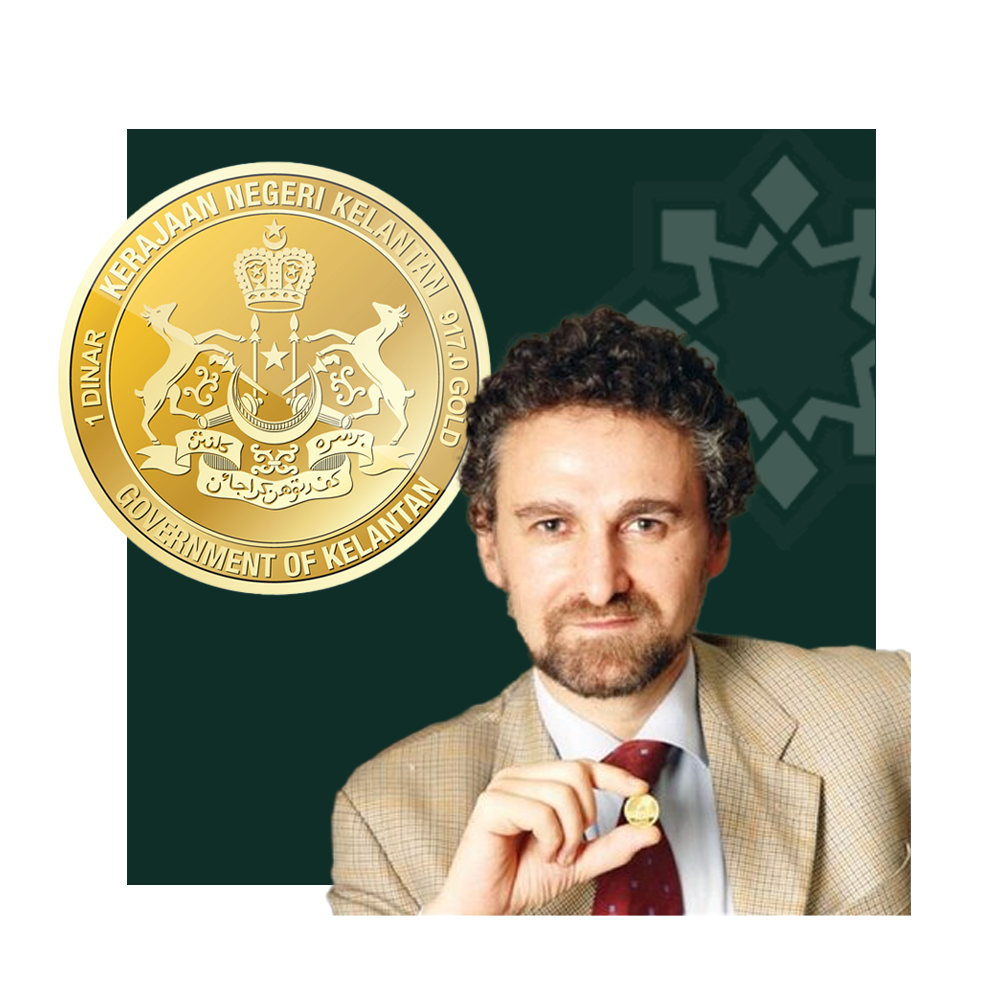
The Kelantan Gold Dinar initiative, launched in August 2010, represents a significant endeavor by the Malaysian state of Kelantan to reintroduce the Islamic gold dinar and silver dirham as an alternative medium of exchange.
This pioneering move was largely the result of extensive advocacy and groundwork laid by Shaykh Umar Ibrahim Vadillo, a fervent proponent of Muamalat principles, who played an instrumental role in convincing the Kelantan government and relevant stakeholders. As the Chief Executive Officer of Kelantan Golden Trade, Shaykh Umar Vadillo oversaw the conceptualization, minting, and initial circulation of these precious metal coins.
Although not granted legal tender status under Malaysian federal law, the dinars and dirhams saw initial uptake among local businesses and civil servants, attracting international attention. This initiative holds immense significance as a precedent for the Islamic world, symbolizing a practical step towards challenging conventional, Riba-based financial systems and reigniting discourse on real-value currency rooted in Islamic tradition. It provided a tangible case study for the viability and challenges of implementing an alternative monetary system within a modern economy, inspiring ongoing discussions and efforts across Muslim-majority nations.
The Kelantan Gold Dinar initiative underscores the potential for integrating alternative, real-value currency systems within contemporary economic frameworks. It highlights the critical role of dedicated advocacy and visionary leadership in pursuing economic models aligned with ethical and traditional principles.
This case study offers invaluable insights for government agencies considering innovative approaches to monetary reform and the development of resilient financial systems.
Islamabad, Pakistan
Pakistan is on an unyielding quest to create a Riba-free financial system, a constitutional mandate set to be achieved by January 1, 2028. This ambitious transformation is driven by a series of landmark judicial rulings that have consistently deemed interest-based banking un-Islamic.
Beyond the legal battle, Shaykh Umar Vadillo and Humaira Shahid offer a radical vision: a return to real-wealth, asset-backed currencies like the Gold Dinar and Silver Dirham, and genuine profit-sharing (Muamalat). They argue that much of mainstream Islamic finance merely “islamises capitalism,” failing to embody the true spirit of Shariah.
Regulatory bodies like the State Bank of Pakistan and the Securities and Exchange Commission of Pakistan are actively shaping this transition with strategic plans and Shariah governance guidelines. However, the journey is not without its hurdles, including varied Shariah interpretations, liquidity management issues, and the complexities of innovation. Pakistan’s experience highlights the constant tension between strict Islamic principles and the practicalities of a modern global economy.
This ongoing pursuit underscores a powerful national commitment to an equitable, asset-based, and risk-sharing financial future.

To learn how the lessons from our case studies—such as the Kelantan Dinar initiative and the global petition on Riba—can inform and strengthen your policies or projects, please complete the form below.
Our team will be in touch to discuss how these real-world experiences can be adapted to your goals and challenges in building ethical, Shariah-compliant financial systems.